
Remembering Alex Zanardi
A champion and a hero.

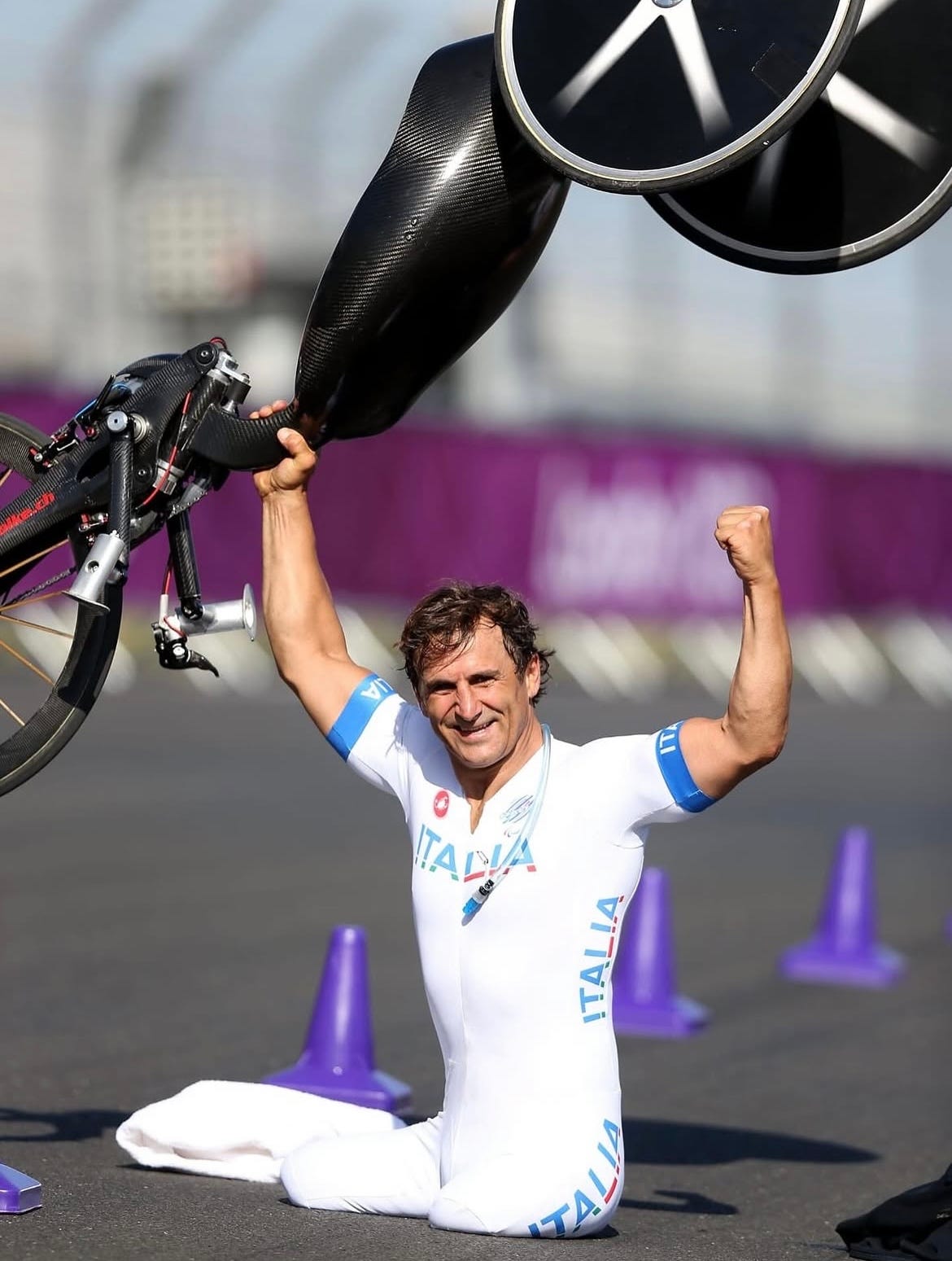
Alex Zanardi has died and for anyone who has followed motorsport and has a love of the Olympics and Paralympics, it’s a particularly sad day. I feel compelled to write down a few things about someone who deserves to be remembered as a genuine sporting hero, for both his array of achievements and his astonishingly inspirational and courageous attitude to life. I never met him, but, perhaps because I reside in that motorsport and Olympic/Paralympic sweetspot, I can’t think of many athletes who have made such an impact on me. If you aren’t familiar with his story, hopefully this gives a sense of it.
As a young fan switching on to F1 in the early 1990s, Zanardi was swiftly on radar, via Murray Walker on the BBC and the pages of Autosport, as a young Italian talent to watch - clearly quick, but only occasionally able to show it, driving for the underfunded Lotus team in its final years of existence.
Happily, he found the right place to demonstrate his speed and flair, when he arrived in America in 1996, joining Chip Ganassi Racing in the CART series (both previously and now once again Indycar): pole in his second race, three wins in his first season and then two dominant championships, in 1997 and 1998 followed.
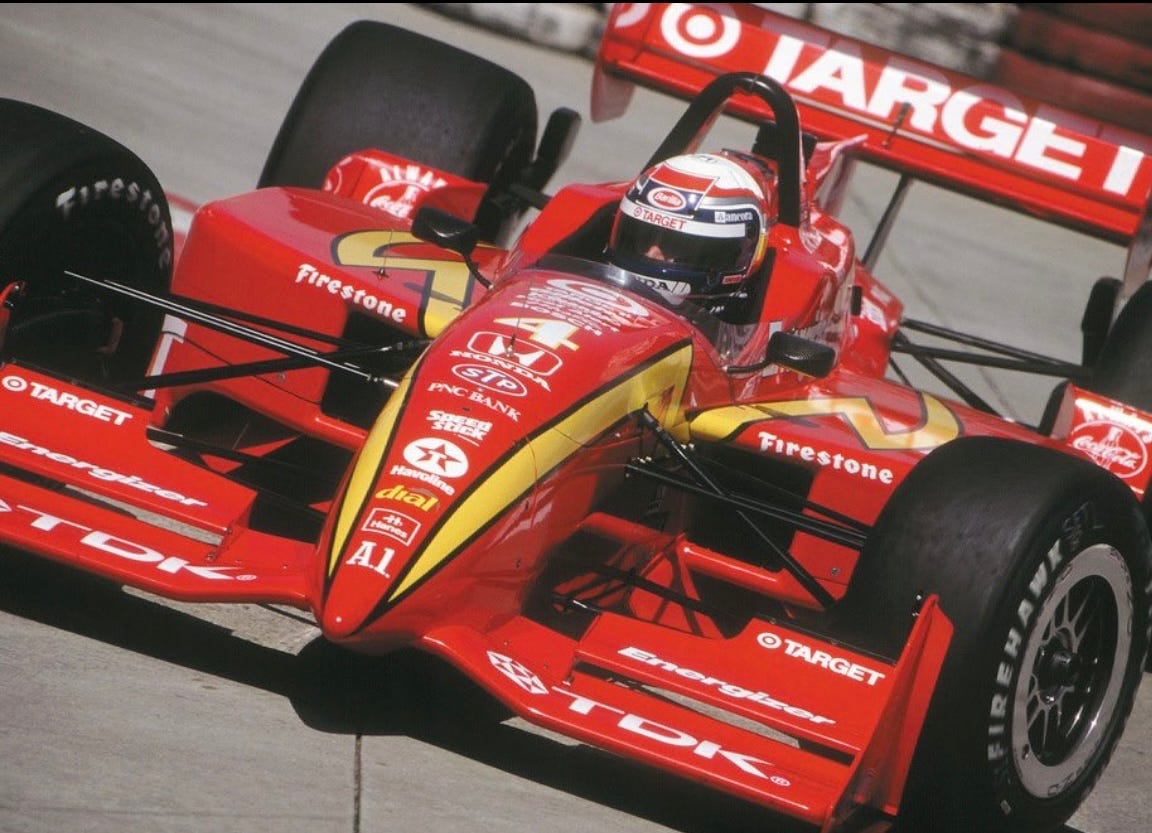
Zanardi was the standout star of CART at a point in the late 1990s when US open-wheel racing split into two. It meant he never competed in the showpiece Indianapolis 500, which was at the time part of the rival Indy Racing League. But that did not diminish the quality of his CART exploits - long before ‘track limits’ were a thing, anyone who saw what became known as ‘The Pass’ at Laguna Seca’s Corkscrew on the last lap in 1996 can attest to that.
It was perhaps little surprise that Zanardi, flush with newfound success, was lured back to F1 in 1999, when Williams came calling. There was unfinished business, and I recall the anticipation and expectation ahead of his return - after all, he was following the path taken by Jacques Villeneuve, who had transferred from CART to F1 with Williams three years earlier and gone on to win the 1997 world championship. At that time, there was something almost romantic about drivers making the move from the US to try and make it - prove themselves - in F1; Juan Pablo Montoya would do the same in 2001, joining Williams after winning the CART championship when he replaced Zanardi at Chip Ganassi in 1999.
In Zanardi’s case, his return to F1 did not work out as hoped. Williams was a fading force and he never quite managed to adapt to a breed of lighter, more skittish cars than he’d been used to in America. After a single season alongside Ralf Schumacher in the incongruous Winfield-sponsored red and white Williams, the decision was taken to replace him for the 2000 season. A return to CART beckoned.
Tragically, it was short-lived. At the newly-opened Lausitzring in Germany, just a few days after 9/11 in 2001, Zanardi suffered an appalling accident, and was hit broadside violently by another car whilst at slow speed recovering from a spin exiting the pit-lane. It was a gruesome, shocking incident - one I can’t watch back, and I don’t recommend you seek out. Zanardi lost his legs effectively on impact and but for significant medical intervention, would have lost his life in the helicopter on the way to hospital. It marked the beginning of a long and intensive period of recovery and rehabilitation, but the widely-held assumption was his racing days were over.
Not so. Zanardi’s autobiography, My Story, written prior to his Paralympic exploits, is one of the most honest, gut-wrenching yet ultimately uplifting athlete autobiographies ever written. It details his injuries, his recovery but it’s his attitude and gratitude that shines through - yes, he’d suffered life-changing injuries. But he was alive to tell the tale - and he kept smiling whilst doing so.
You can seek out many interviews during this period where Zanardi’s ‘palms-up’ attitude and outlook never failed to astound. It helped that he was as eloquent, funny and honest in English as he apparently was in Italian, his public positivity shining through in his second language.
Slowly but surely, over time, news began to dribble out that he was thinking about returning to racing, via the World Touring Car Championship and BMW, with whom he would go on to win four races between 2005 and 2009, driving a specially-adapted car.
By this point, a new challenge has started to stir within him. Taking up handcycling, Zanardi found a new competitive arena. And of course he was competitive. The second act of his career was to become a one of the great Paralympic stories.
It was fitting almost beyond belief that, of all places, it was at Brands Hatch, venue for the handcycling races at London 2012, where he won two gold medals, and a silver. Alex Brooker’s heartfelt tribute to him then deserves to be heard widely, 14 years on.
More medals - including two more golds - followed four years later, at Rio 2016, elevating him to legendary status in the Paralympic movement - I know the team at the International Paralympic Committee greatly valued and appreciated Zanardi’s role in helping raise the profile of para-sports and introduce it to a new audience. He was aiming for Tokyo 2020 when a second tragic accident befell him, a collision with a vehicle whilst competing in Italy, in June of that year, resulting in serious head injuries.
Anyone who saw Alex Zanardi race - and then race on in a completely different discipline - was, more often than not, impressed. Anyone who heard him speak was dazzled. He was outstanding and fierce competitor and, clearly, in all sorts of ways, a special man. Even from a distance, he was the business.
May he rest in peace.